
Cockroach Janta Party Manifesto: The Viral Blueprint That Has India’s Youth Talking
What happens when an internet joke evolves into a movement with political ambitions?
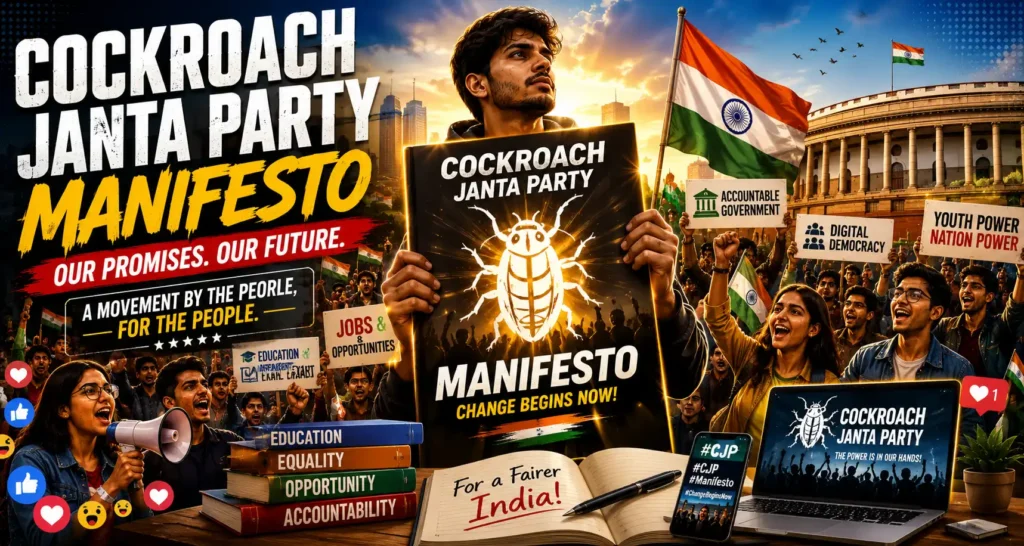
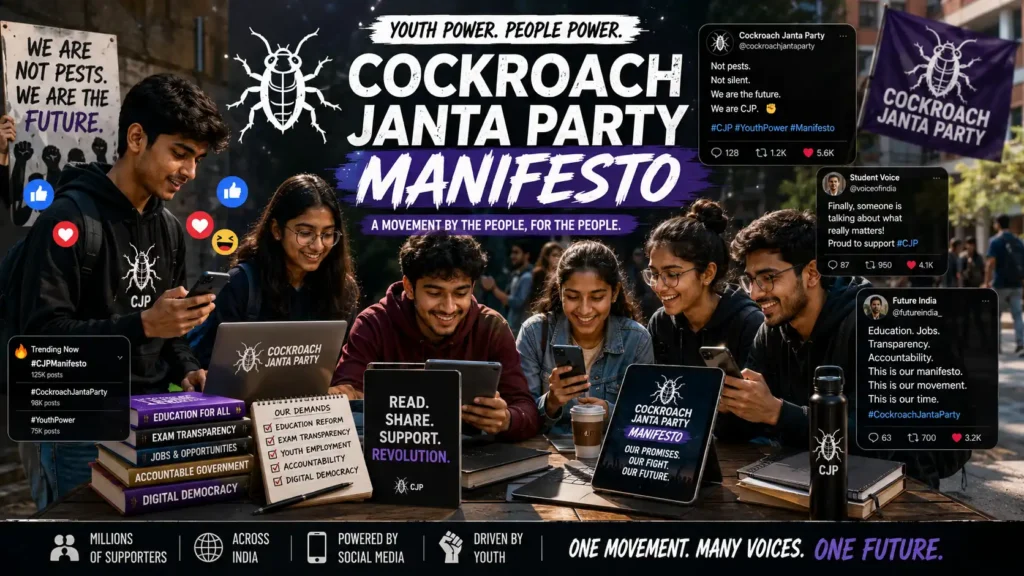
That question sits at the heart of the cockroach janta party manifesto, a document that has become one of the most discussed political texts among young Indians in recent months. What began as a satirical response to a controversial public remark soon transformed into a youth-led movement attracting millions of followers online and thousands of supporters on the ground.
While critics dismiss the movement as meme politics, supporters argue that the manifesto addresses issues traditional political parties have ignored for years: exam leaks, unemployment, lack of accountability, and the widening gap between young citizens and policymakers.
The real story isn’t just about a cockroach symbol or viral social media posts. It’s about why a generation feels compelled to embrace an unconventional political identity in the first place.
In this article, we’ll break down the Cockroach Janta Party manifesto, examine its key promises, compare it with traditional political manifestos, and explore why it resonates with so many young Indians.
What Is the Cockroach Janta Party Manifesto?
The Cockroach Janta Party (CJP) emerged as a youth-driven political movement that uses satire, social media, and grassroots activism to highlight systemic issues affecting students and young professionals.
Its manifesto serves as the movement’s roadmap.
Unlike conventional manifestos filled with lengthy policy language, the Cockroach Janta Party manifesto focuses on relatable concerns that directly affect everyday citizens, particularly students and first-time voters.
The manifesto centers around five major themes:
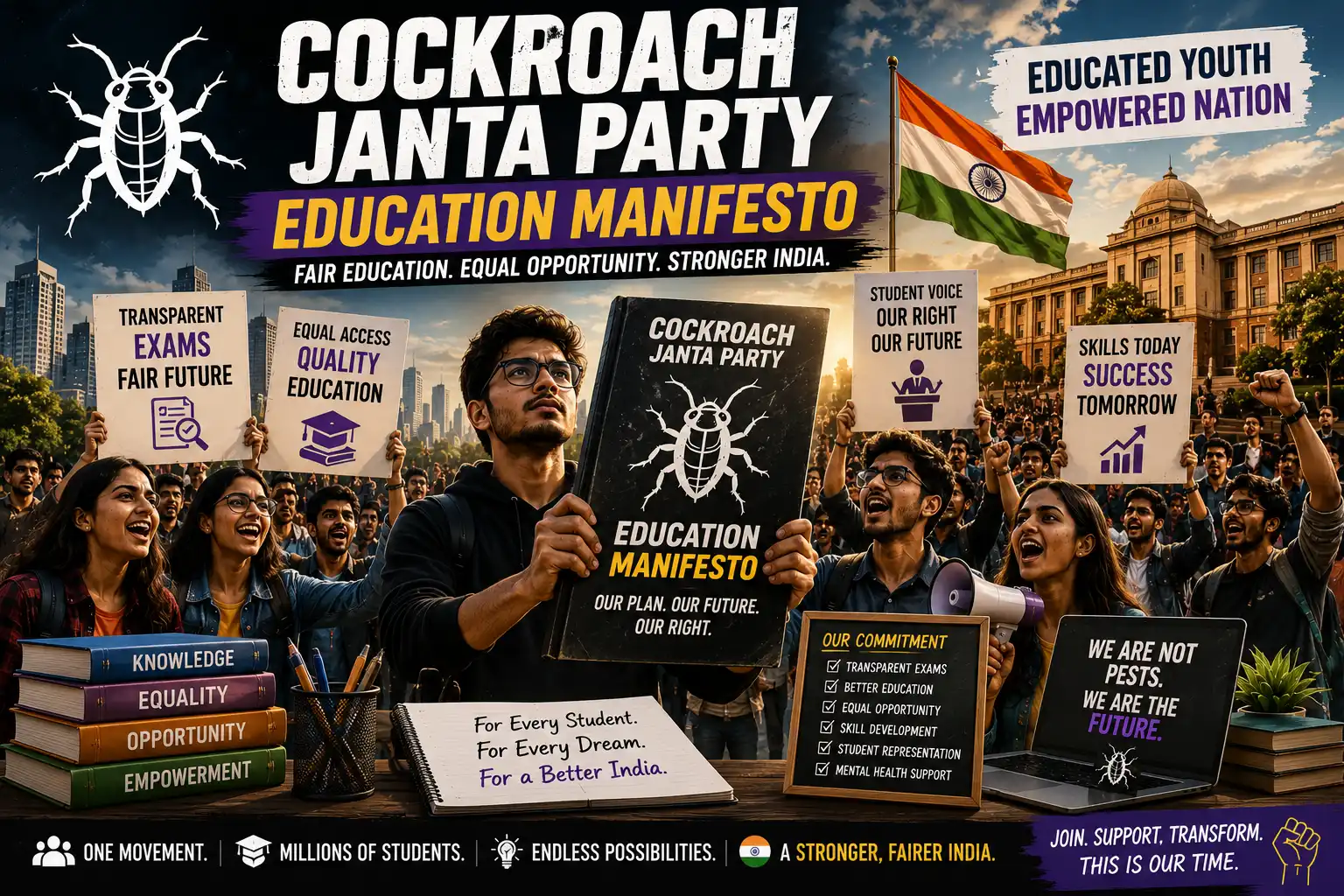
- Education reform
- Exam transparency
- Employment opportunities
- Government accountability
- Citizen participation
These issues have repeatedly surfaced in public discussions, especially after controversies involving examination irregularities and growing concerns about youth unemployment.
Why the Manifesto Matters Beyond Memes
Many observers initially viewed the Cockroach Janta Party as another viral internet trend.
However, the manifesto changed that perception.
A movement becomes harder to dismiss when it begins offering concrete demands instead of simply criticizing existing systems.
The manifesto transformed CJP from a social media phenomenon into a platform attempting to articulate the frustrations of a generation.
What makes it particularly interesting is how it blends humor with serious political messaging.
Supporters use memes to attract attention, but the underlying concerns remain deeply real.
Key Promises in the Cockroach Janta Party Manifesto
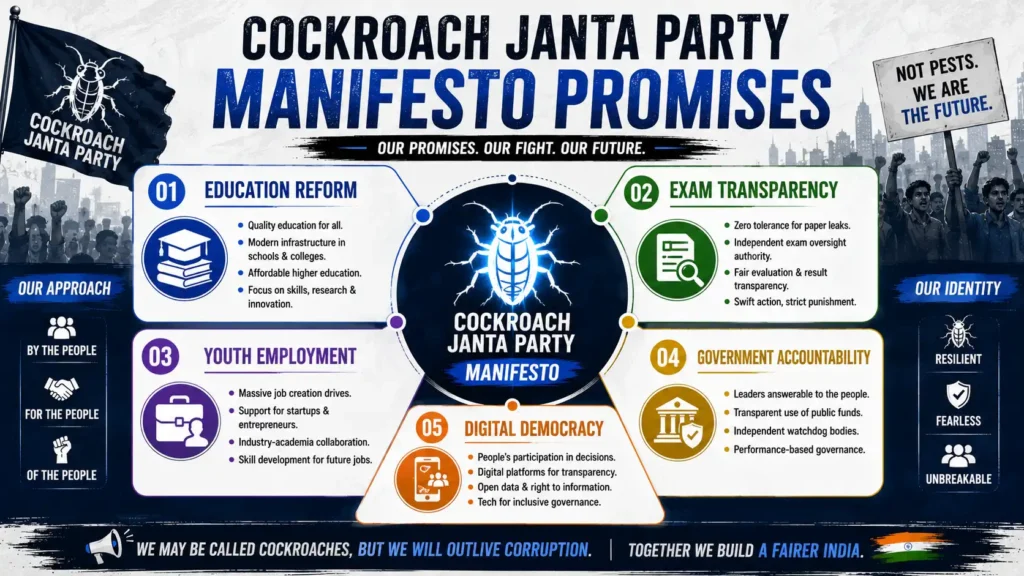
1. Education Reform
Education occupies the center of the manifesto.
Many students have expressed frustration regarding examination processes, administrative delays, and inconsistencies in evaluation systems.
The manifesto calls for:
- Greater transparency in examinations
- Faster grievance resolution
- Improved educational infrastructure
- Better access to quality education
Supporters argue that education should be treated as an investment rather than merely an administrative responsibility.
2. Exam Transparency
One of the most widely discussed aspects of the manifesto involves examination integrity.
The movement gained significant attention during conversations around exam-related controversies, making this issue central to its platform.
The manifesto advocates:
- Independent oversight of major examinations
- Stronger anti-cheating measures
- Accountability for administrative failures
- Transparent investigation processes
For many students, this issue represents fairness rather than politics.
3. Youth Employment
Perhaps the strongest emotional driver behind the manifesto is employment.
Many young Indians spend years preparing for competitive exams while facing uncertain career prospects.
The manifesto highlights:
- Job creation initiatives
- Skill development programs
- Better industry-academia collaboration
- Support for entrepreneurship
The movement frequently frames unemployment as a national challenge rather than an individual failure.
4. Government Accountability
Another recurring theme is accountability.
The manifesto emphasizes that public officials and institutions should be answerable to citizens.
Key proposals include:
- Increased transparency in public decisions
- Clear communication during crises
- Faster response to public grievances
- Public review mechanisms
This demand reflects a broader trend among younger voters who expect greater transparency from institutions.
5. Digital Democracy
Given the movement’s online origins, it’s no surprise that digital participation plays a significant role.
The manifesto proposes:
- Enhanced citizen engagement platforms
- Public consultations through digital channels
- Increased use of technology in governance
- Better access to government information
Supporters believe technology can reduce the gap between citizens and policymakers.
Cockroach Janta Party Manifesto vs Traditional Political Manifestos
The biggest difference lies in communication style.
| Feature | Traditional Manifestos | Cockroach Janta Party Manifesto |
|---|---|---|
| Language | Formal and technical | Simple and relatable |
| Audience | General electorate | Primarily youth |
| Communication | Speeches and rallies | Social media and digital platforms |
| Tone | Institutional | Conversational |
| Focus | Broad policy agendas | Youth-centric concerns |
| Engagement | Top-down communication | Community-driven interaction |
This contrast explains why the manifesto has generated so much discussion online.
Young audiences often prefer clear messaging over lengthy policy documents.
Why Gen Z Connects With the Manifesto
The success of the Cockroach Janta Party manifesto reveals something important about modern political engagement.
Young people increasingly want:
- Authentic communication
- Direct engagement
- Issue-focused politics
- Transparency
Traditional political messaging sometimes struggles to connect with digital-native audiences.
The manifesto succeeds because it speaks the language many young citizens already use online.
Its popularity isn’t necessarily an endorsement of every proposal.
Instead, it reflects a desire to be heard.
Many supporters say the movement gives voice to concerns that often feel overlooked in mainstream political discussions.
The Power of Symbolism
The cockroach symbol itself deserves attention.
Historically, political movements have often reclaimed negative labels and transformed them into symbols of resilience.
Supporters interpret the cockroach as representing persistence.
A cockroach survives difficult conditions, adapts quickly, and refuses to disappear.
Whether one agrees with the symbolism or not, it has proven remarkably effective in creating a memorable political identity.
This branding strategy helped the movement stand out in an increasingly crowded digital landscape.
Criticism and Challenges
No manifesto is without critics.
Skeptics argue that:
- Some proposals lack implementation details.
- The movement relies heavily on social media momentum.
- Turning online engagement into long-term political organization remains difficult.
- Viral popularity doesn’t automatically translate into electoral success.
These criticisms are valid.
History shows that many internet-driven movements struggle to maintain momentum over time.
The challenge for CJP is moving beyond awareness campaigns and demonstrating practical solutions.
Can the Manifesto Become Reality?
This is perhaps the most important question.
The manifesto has succeeded in generating discussion.
It has succeeded in attracting attention.
It has succeeded in mobilizing supporters.
But transforming ideas into policy requires organization, leadership, resources, and sustained public support.
The future of the movement will depend on whether it can:
- Expand beyond social media
- Build grassroots networks
- Develop detailed policy frameworks
- Maintain public trust
Regardless of what happens next, the manifesto has already achieved one significant outcome: it has forced conversations about issues many young Indians care deeply about.
Key Takeaways
| Issue | Manifesto Position |
|---|---|
| Education | Greater transparency and reform |
| Exams | Independent oversight and accountability |
| Jobs | Increased employment opportunities |
| Governance | Stronger public accountability |
| Technology | Expanded digital participation |
| Youth Representation | More direct involvement in decision-making |
Final Thoughts
The cockroach janta party manifesto is more than a collection of demands.
It represents a growing desire among young Indians to participate in shaping conversations about education, employment, and governance.
Whether the movement ultimately evolves into a lasting political force remains uncertain.
What is certain, however, is that it has tapped into frustrations that resonate with millions.
Perhaps the most valuable lesson from the manifesto is not about politics at all.
It’s about participation.
When people feel unheard, they find new ways to make their voices impossible to ignore.
And in today’s digital age, those voices can travel much further than anyone expects.
Explore More
- What Is Cockroach Janta Party?
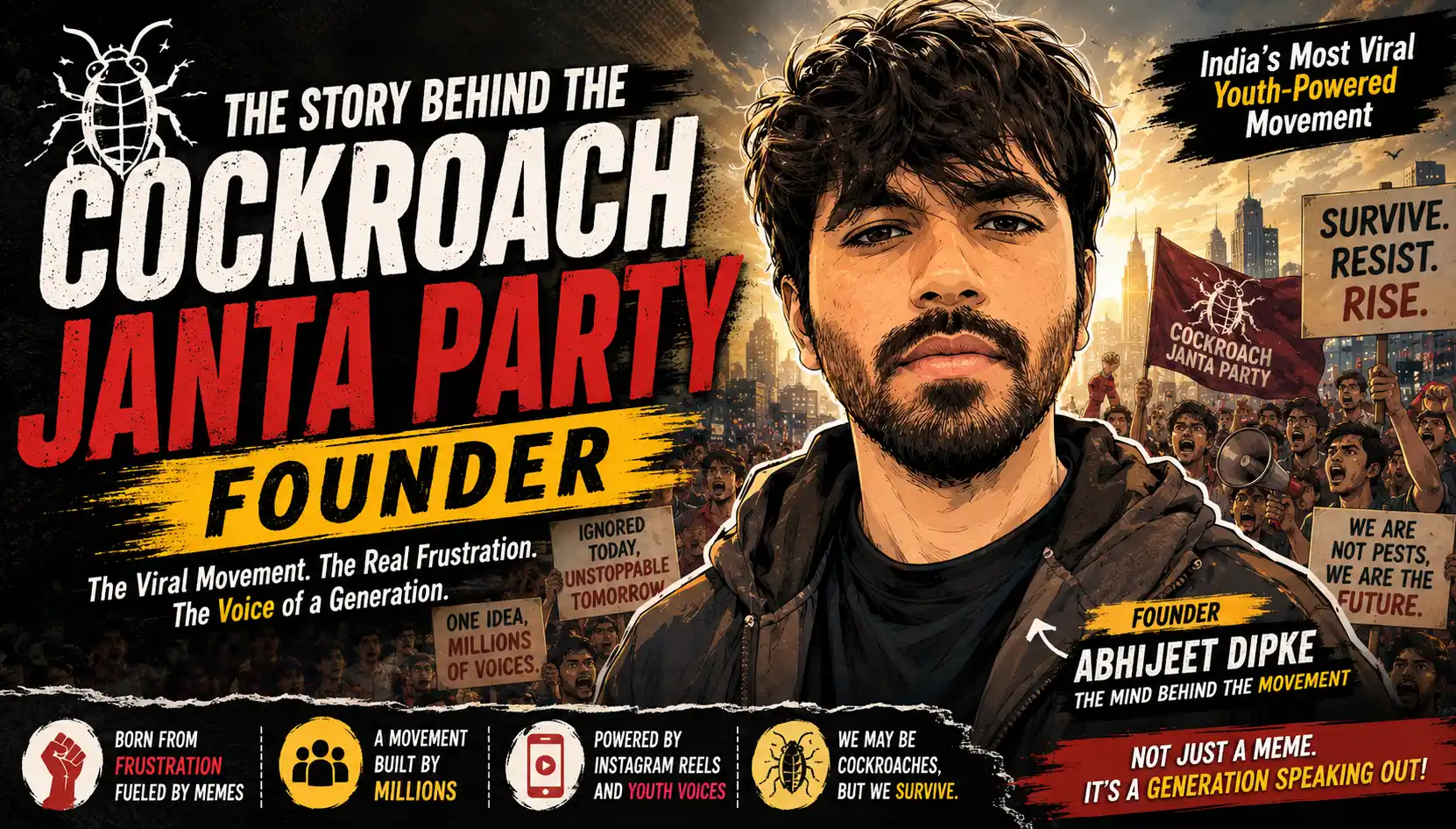
- Cockroach Janta Party Founder Explained
- Cockroach Janta Party Protest: What Happened at Jantar Mantar?
- Cockroach Janta Party Instagram Growth Story
- Santy Sharma Calls Cockroach Janta Party “Internet Drama”
Share Your Thoughts
Do you think the Cockroach Janta Party manifesto reflects genuine youth concerns, or is it primarily a social media phenomenon?
Leave a comment below, share this article with friends, and join the conversation shaping one of India’s most unusual political movements.