
Introduction – Rapper Santy Sharma Calls Cockroach Janta Party
The rise of the rapper santy sharma cockroach janta party controversy proves that India’s internet culture is no longer separate from politics.
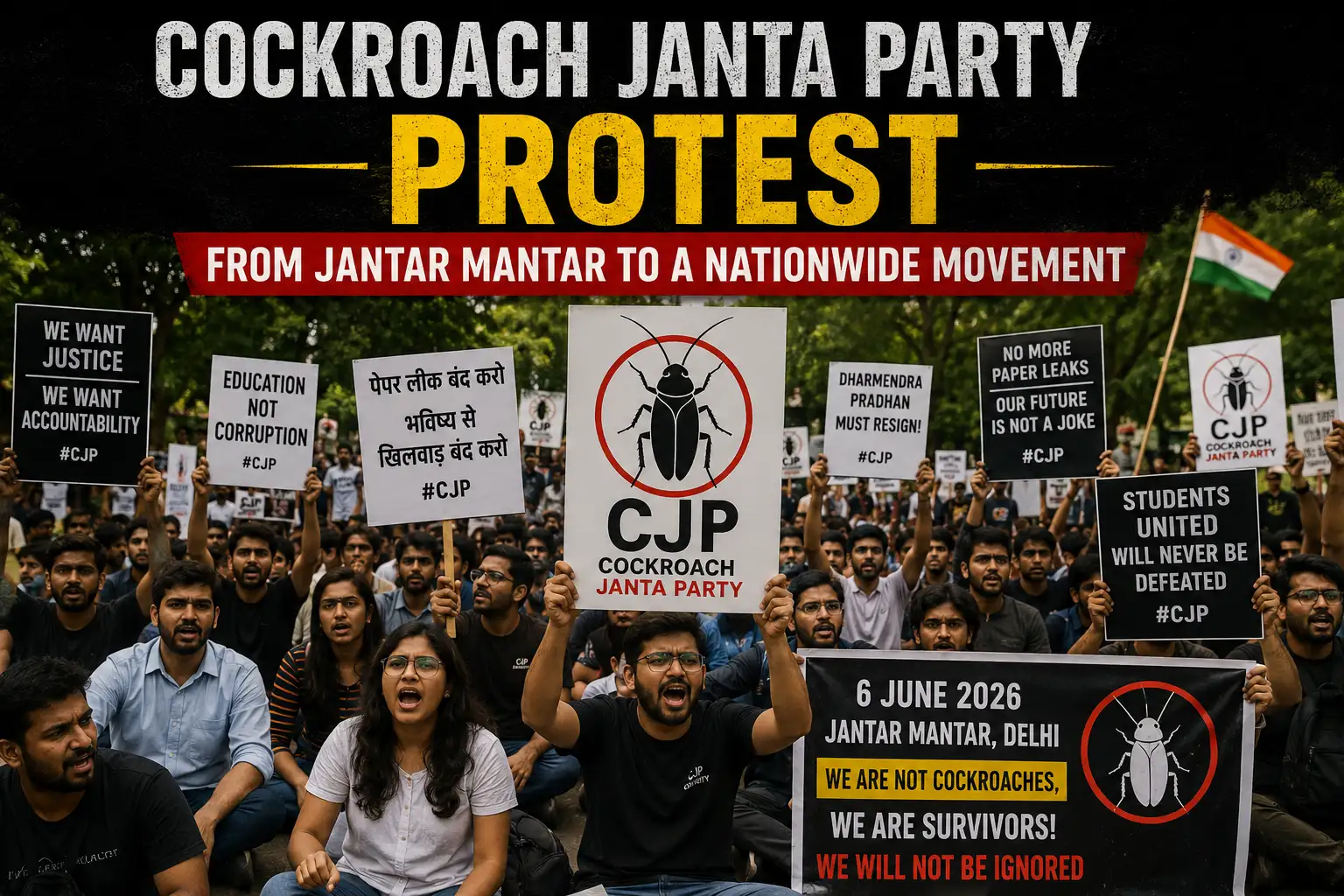
In recent months, the Cockroach Janta Party (CJP) transformed from a satirical online movement into one of India’s most talked-about social media phenomena. Millions of young Indians engaged with its content, shared memes, and debated its message. But while many celebrated the movement, Indian rapper Santy Sharma took a different stance.
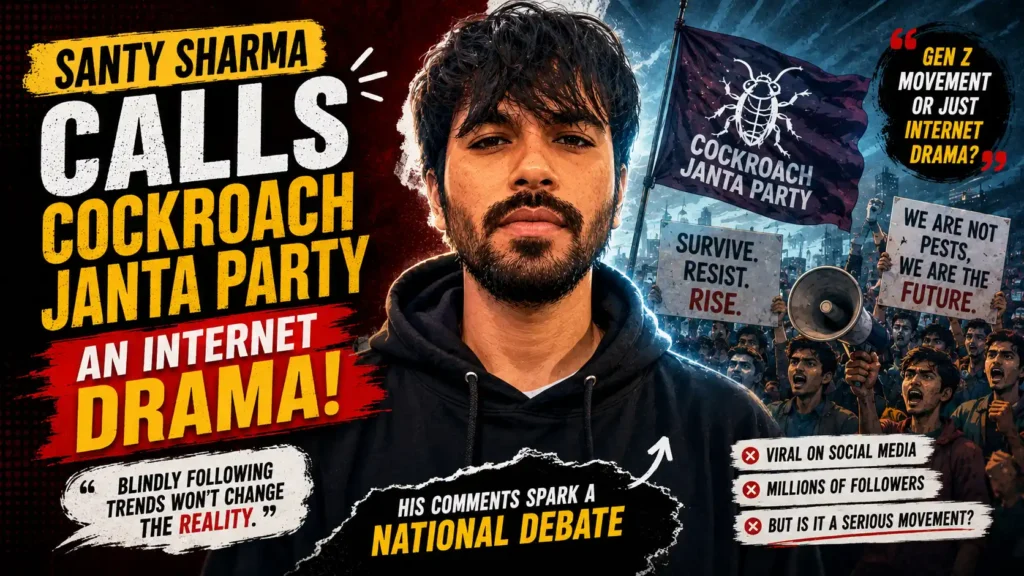
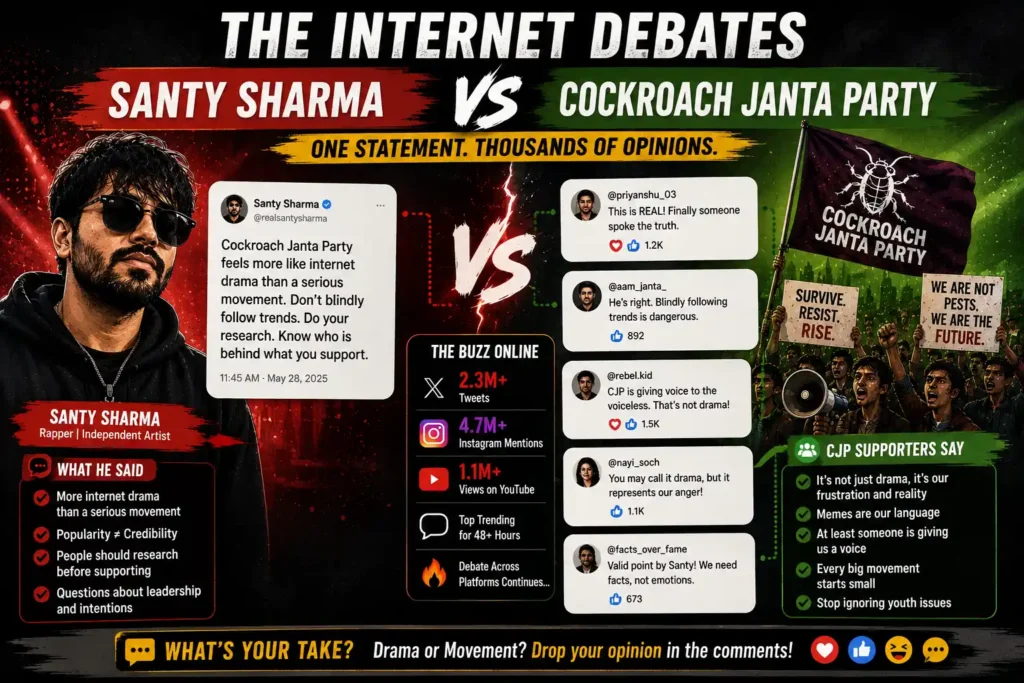
In a strongly worded social media post, Sharma described the Cockroach Janta Party as “more internet drama than a serious movement,” triggering widespread reactions across Instagram, X, YouTube, and news platforms.
His remarks immediately divided public opinion.
Some praised him for encouraging critical thinking. Others accused him of misunderstanding a youth-driven movement that reflects genuine frustration.
So who is Santy Sharma, what exactly did he say, and why did his comments create such a buzz?
Let’s explore the story behind one of India’s most interesting internet debates.
Who Is Santy Sharma?
Santy Sharma is an Indian rapper, singer, songwriter, and independent music artist from Madhya Pradesh. Born as Ganesh Sharma, he built his career through independent music releases before gaining broader recognition through digital platforms and Bollywood-related projects.
Over the years, Sharma has developed a reputation for expressing strong opinions on social issues and internet trends.
Unlike many artists who avoid controversial discussions, he often shares direct views with his followers.
That willingness to speak openly is one reason his comments about the Cockroach Janta Party attracted so much attention.
What Did Santy Sharma Say About Cockroach Janta Party?
The controversy began when Sharma posted his views on social media regarding the rapidly growing movement.
According to reports by the Economic Times, Sharma stated that the Cockroach Janta Party felt “more like internet drama than a serious movement.” He also warned people against blindly following online trends without examining the people and motivations behind them.
His criticism focused on two main concerns:
1. Blind Support For Viral Movements
Sharma argued that many internet users join movements simply because they are trending.
In his view, popularity alone should not be treated as proof of credibility.
2. Questions About Leadership
He also questioned aspects of the movement’s leadership and background, encouraging followers to research before embracing any online political narrative.
These comments quickly spread across social media, turning Sharma into a central figure in the ongoing discussion around CJP.
Understanding The Cockroach Janta Party Phenomenon
Before evaluating Sharma’s criticism, it’s important to understand why the movement became popular.
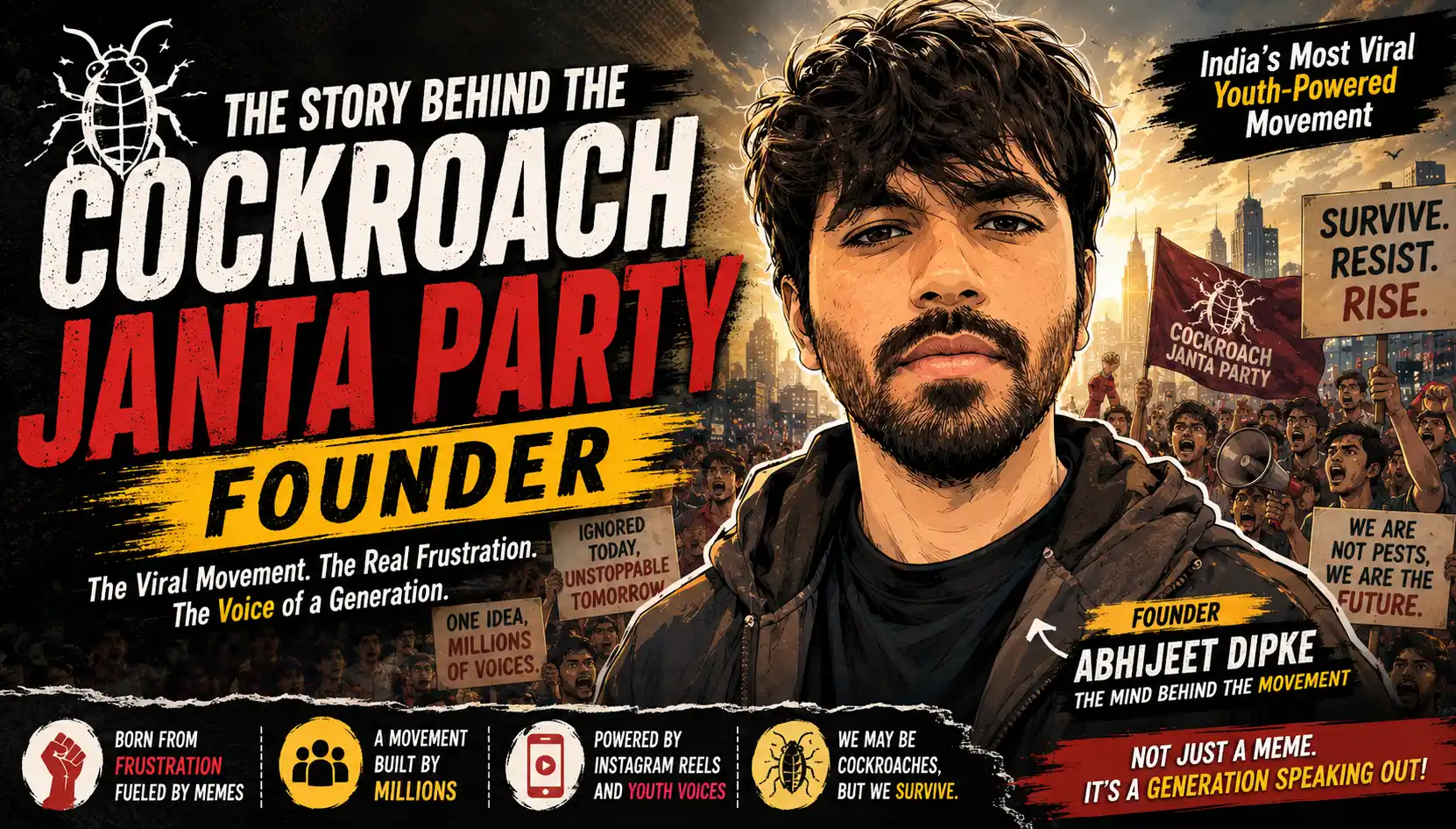
The Cockroach Janta Party was founded by Abhijeet Dipke and emerged as a satirical response to remarks perceived as insulting toward unemployed youth. Reuters reported that the movement rapidly gained traction among Gen Z audiences frustrated by unemployment, rising costs, exam-related controversies, and political dissatisfaction.
The movement’s appeal comes from its symbolism.
The cockroach represents survival.
For many young people, the message resonated:
- We are ignored.
- We are underestimated.
- But we continue to survive.
That emotional connection fueled massive online growth.
Why Santy Sharma’s Criticism Resonated With Some People
While supporters celebrated CJP, Sharma’s criticism resonated with another group of internet users.
These individuals believe viral movements should face scrutiny rather than automatic support.
Their concerns include:
- Lack of organizational structure
- Limited policy discussions
- Heavy dependence on memes
- Difficulty converting online support into real-world action
Interestingly, these concerns mirror observations made by several analysts and commentators. Reuters reported that despite its enormous online following, CJP faces challenges in building an offline presence and sustainable political influence.
This suggests Sharma’s criticism was not entirely isolated.
It reflected broader questions already being raised about the movement’s long-term viability.
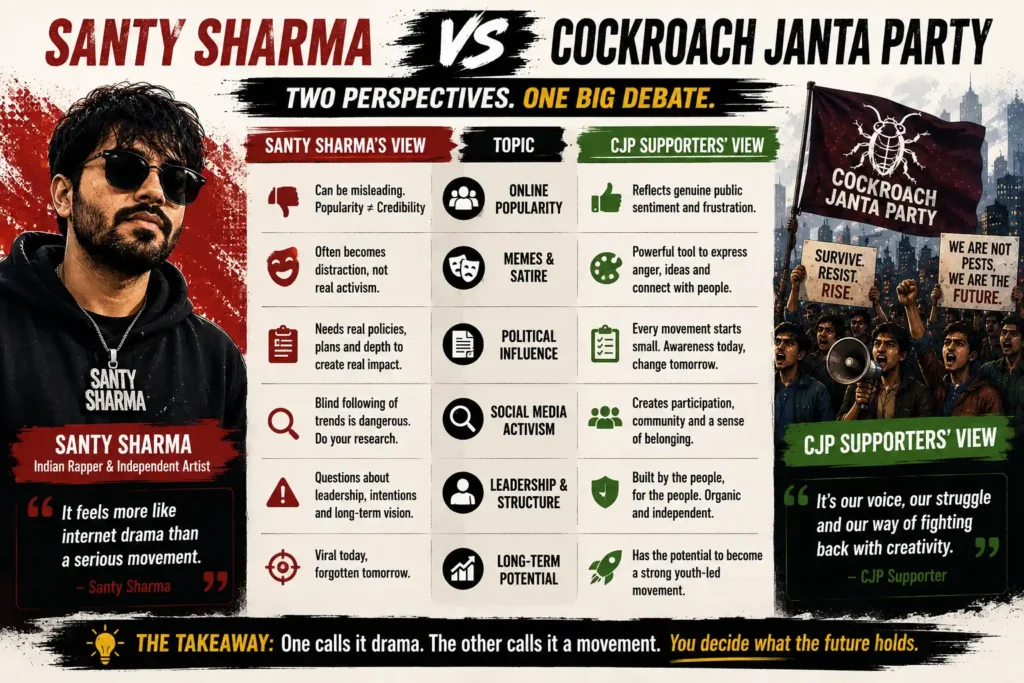
Santy Sharma vs Cockroach Janta Party: Two Different Perspectives
| Topic | Santy Sharma’s View | CJP Supporters’ View |
|---|---|---|
| Online Popularity | Can be misleading | Reflects genuine public sentiment |
| Memes & Satire | Often become distractions | Powerful communication tools |
| Political Influence | Requires substance | Starts with awareness |
| Social Media Activism | Needs scrutiny | Creates participation |
| Youth Engagement | Must be informed | Must be encouraged |
This comparison shows that the debate is not simply about support or opposition.
It is about different understandings of how modern activism should work.
The Rise Of Meme Politics In India
One reason this debate became so important is because India is witnessing the rise of meme politics.
Traditional political communication relies on:
- Speeches
- Press conferences
- Manifestos
- Television debates
Modern internet movements rely on:
- Memes
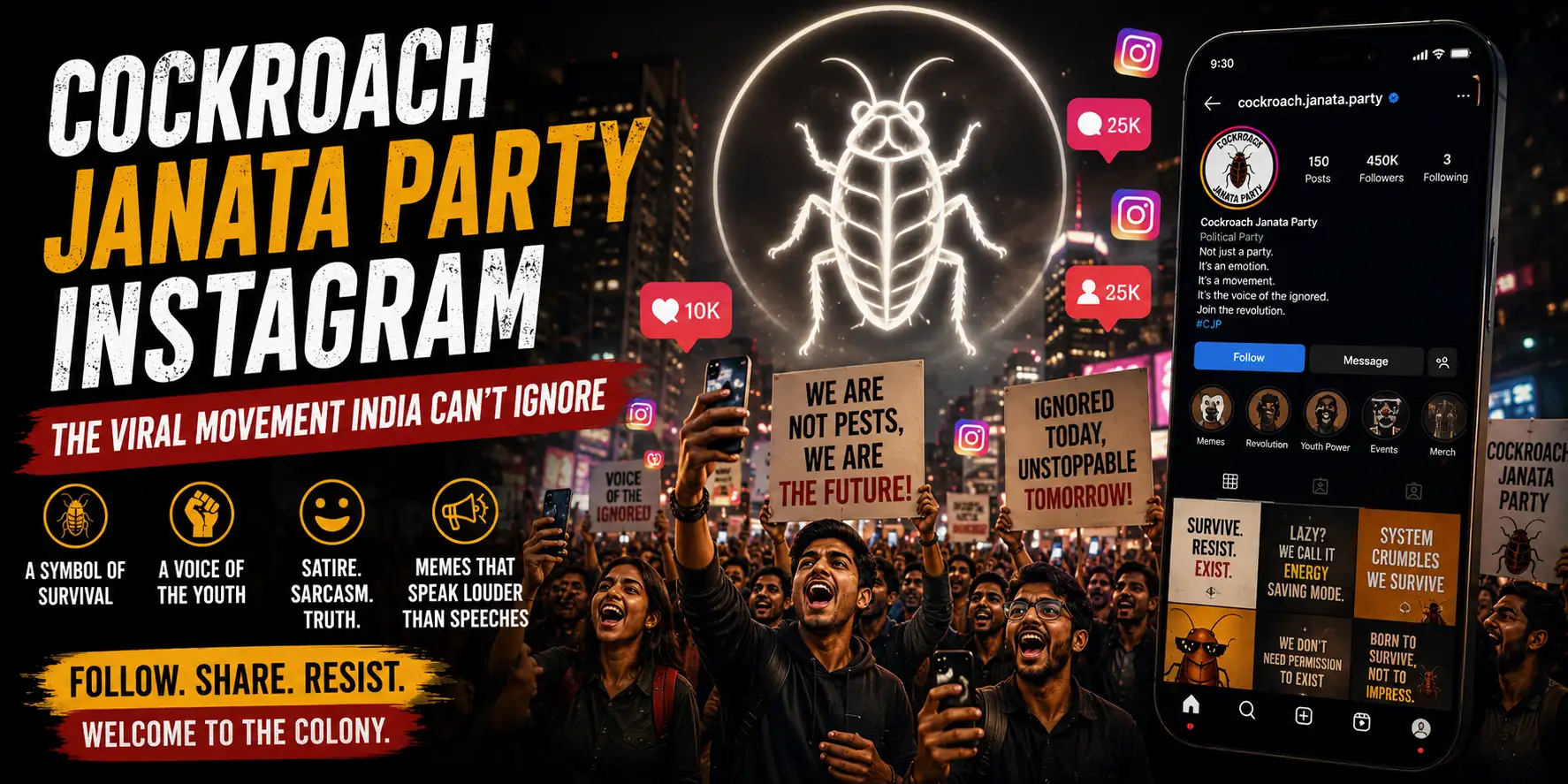
- Reels
- Viral posts
- Community participation
The Cockroach Janta Party belongs firmly to the second category.
Sharma’s criticism highlights a growing concern:
Can meme-driven movements create meaningful change, or do they simply generate temporary excitement?
That question remains unanswered.
Why Gen Z Viewed The Situation Differently
Many younger users defended the movement because they see internet culture differently.
For Gen Z, memes are not merely jokes.
They are a language.
Memes communicate:
- Frustration
- Identity
- Social criticism
- Political opinions
When older generations dismiss memes as entertainment, younger audiences often view them as expressions of real emotions.
This difference explains why reactions to Sharma’s comments were so divided.
Supporters of CJP saw him as dismissing genuine concerns.
Supporters of Sharma saw him as encouraging critical thinking.
The Challenge Of Online Movements
One fascinating aspect of this debate is that both sides raise valid points.
What CJP Gets Right
- It gives frustrated youth a voice.
- It creates community.
- It attracts attention to overlooked issues.
- It encourages participation.
What Critics Like Sharma Get Right
- Popularity is not always credibility.
- Viral content can spread misinformation.
- Real change requires organization.
- Online energy must eventually translate into action.
Reuters noted that analysts remain uncertain whether CJP can successfully transition from a digital phenomenon into a sustained movement.
That uncertainty sits at the heart of the debate.
Why This Story Matters Beyond Politics
At first glance, the disagreement appears political.
In reality, it is also cultural.
The debate reveals how differently people consume information today.
Older models of influence relied on institutions.
Modern influence often comes from:
- Creators
- Influencers
- Musicians
- Meme pages
- Online communities
Santy Sharma’s comments gained attention precisely because artists now play a significant role in shaping public conversations.
The boundaries between entertainment, activism, and politics are becoming increasingly blurred.
Key Takeaways From The Santy Sharma Controversy
Lesson 1: Viral Does Not Mean Untouchable
Even hugely popular movements will face scrutiny.
Lesson 2: Youth Culture Is Reshaping Politics
Memes and social media are becoming political tools.
Lesson 3: Debate Is Healthy
Movements become stronger when challenged.
Lesson 4: Online Communities Are Powerful
Regardless of one’s opinion, CJP demonstrated the influence of digital communities.
Conclusion
The rapper santy sharma cockroach janta party controversy became viral because it touched on a much larger issue than a single social media post.
It raised important questions about:
- Online activism
- Meme politics
- Youth frustration
- Digital influence
- Political accountability
Santy Sharma argued that the movement felt more like internet drama than a serious political force. Supporters responded by saying the movement reflects real emotions that traditional politics often ignores.
Both perspectives reveal something important about modern India.
Politics is no longer happening only in rallies, television studios, or party offices.
It is happening on Instagram feeds, YouTube Shorts, meme pages, and viral posts.
And that reality is changing how an entire generation engages with public life.
- What Is Cockroach Janta Party?
- Cockroach Janta Party Founder Explained
- Cockroach Janata Party Instagram Growth
What do you think?
Was Santy Sharma right to call the movement “internet drama,” or does the Cockroach Janta Party represent genuine youth frustration in India?
Share your opinion in the comments and join the conversation.