
Introduction : Cockroach Janta Party
The phrase cockroach janta party sounds bizarre at first. Some people laughed at it, others ignored it, but within days it exploded across Indian social media. Instagram pages, memes, reels, YouTube shorts, and political discussions suddenly started revolving around a strange symbol: the cockroach.
But this viral trend is not just about jokes.
Behind the memes lies something deeper. The movement reflects frustration among India’s youth around unemployment, inflation, rising pressure, and the feeling that ordinary people are no longer being heard properly in politics.
That is why the cockroach janta party became more than a meme. It became a symbol.
According to reports from Reuters and AP News, the movement rapidly gained millions of followers online and turned into one of the most discussed political satire trends in India. It especially connected with Gen Z audiences who communicate through humor, sarcasm, and viral content rather than traditional political language.
So what exactly is the Cockroach Janta Party, and why are people across India suddenly talking about it?
Let’s break it down.
What Is Cockroach Janta Party?
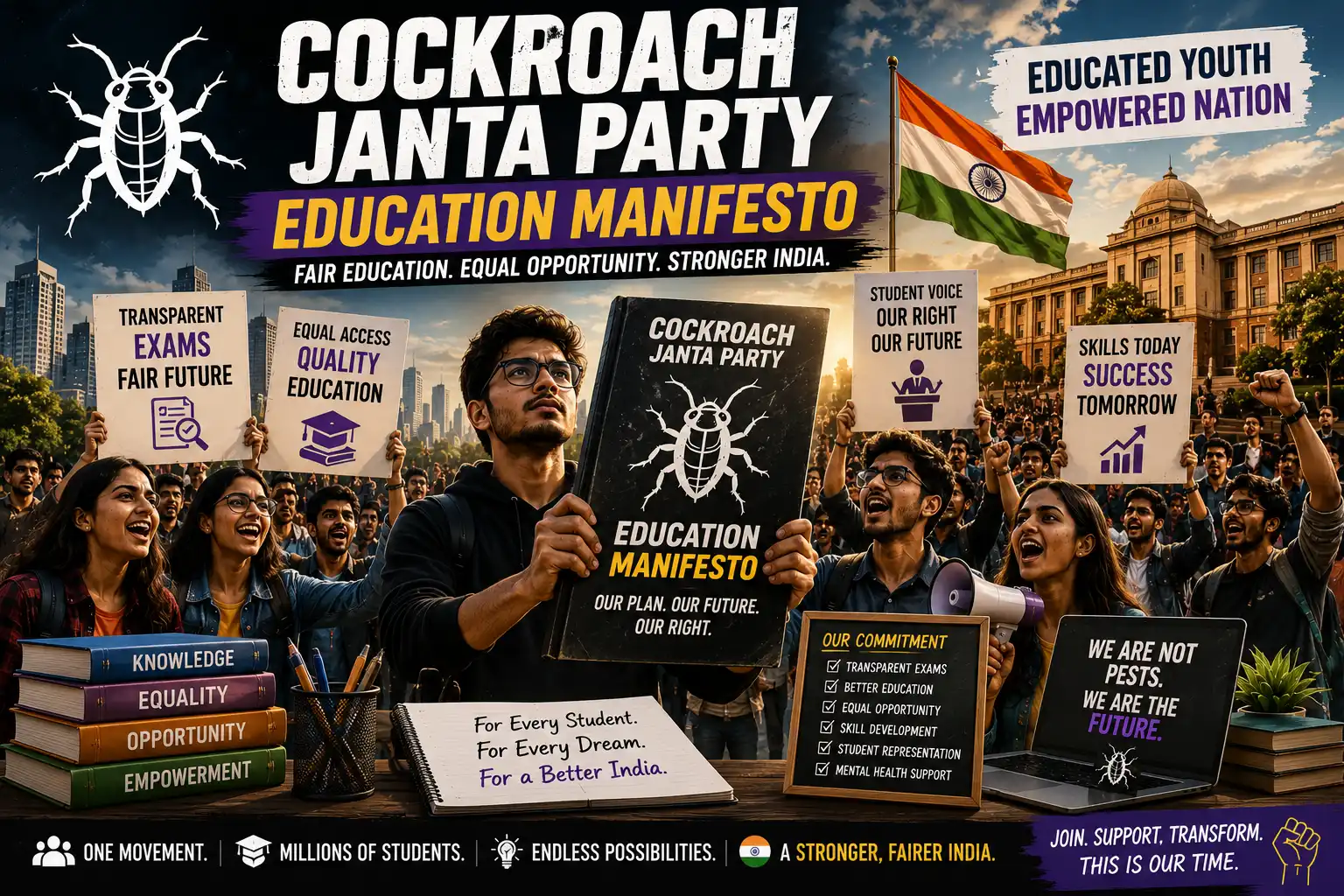
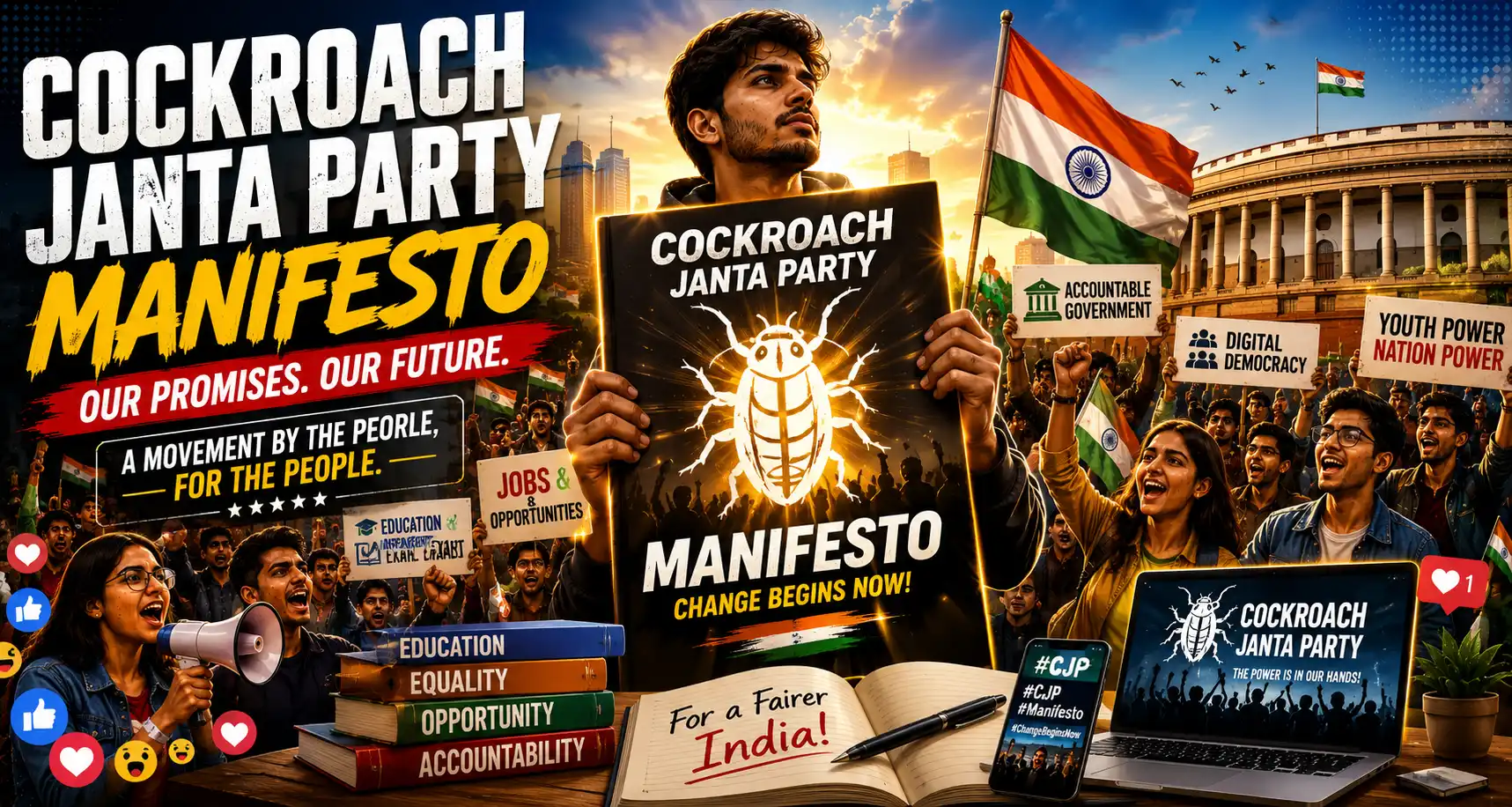
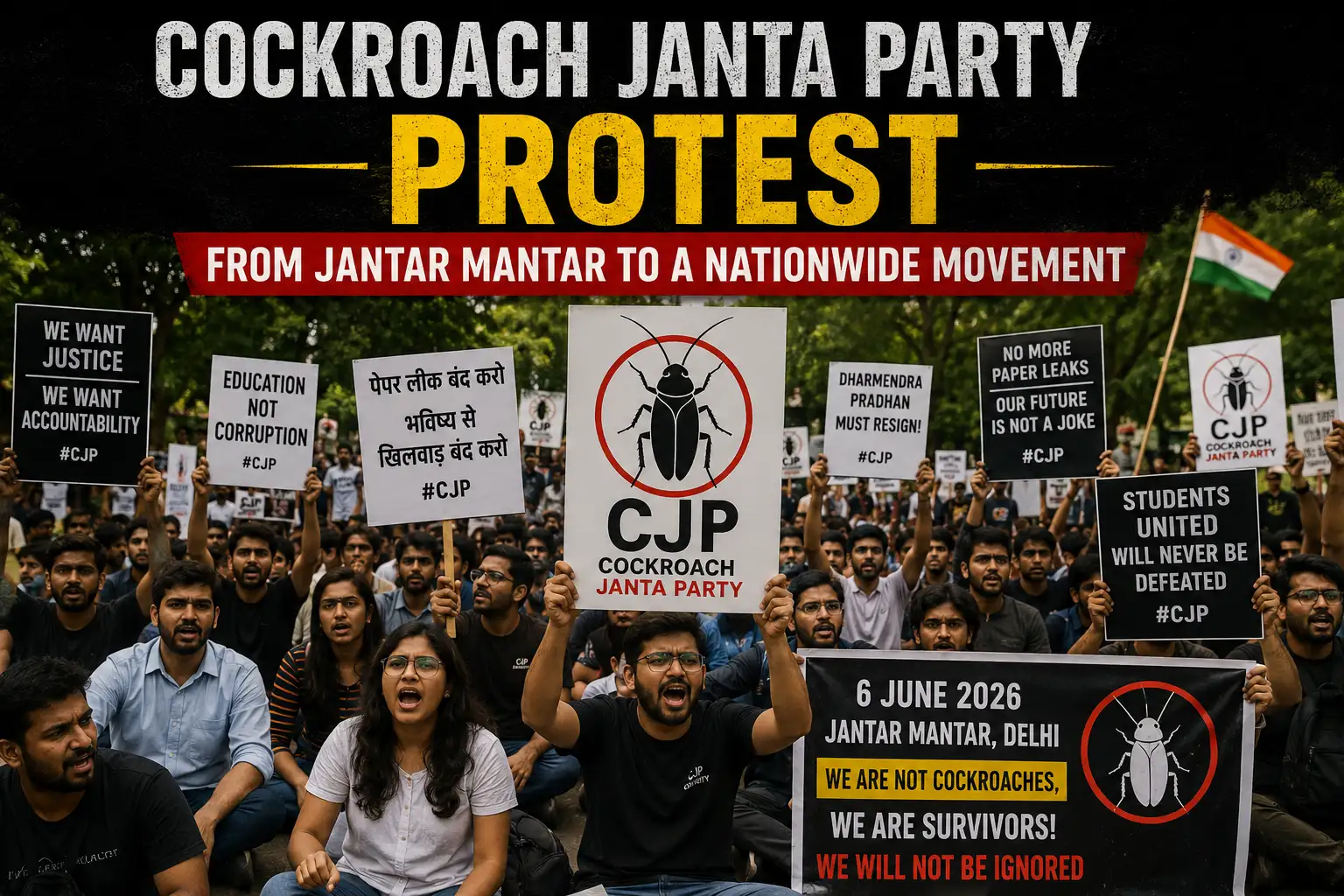
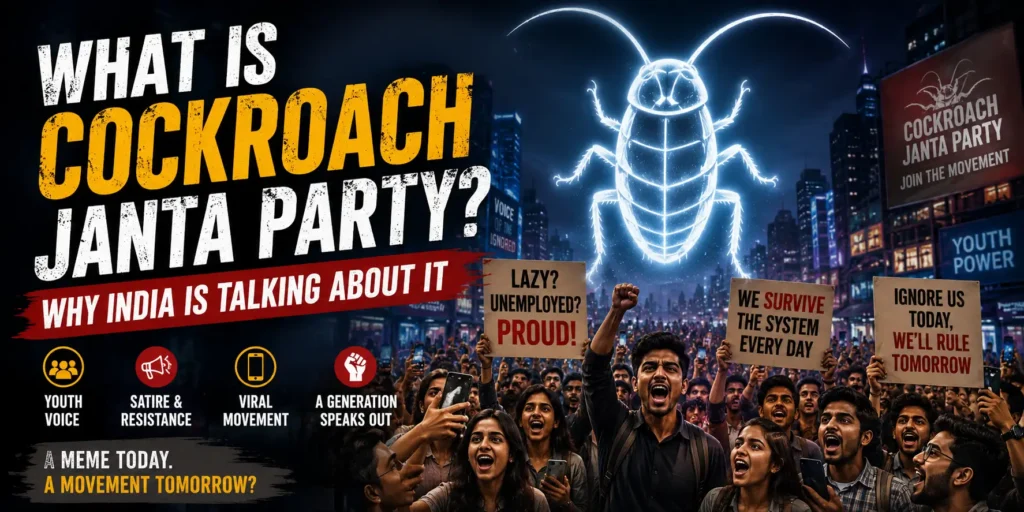
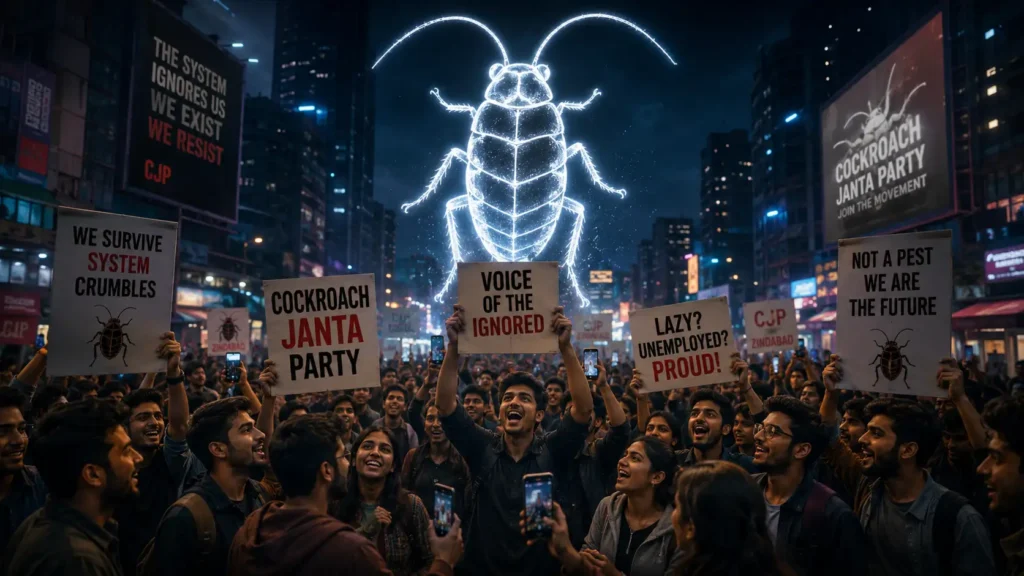
The Cockroach Janta Party (CJP) is a satirical digital political movement that went viral on social media platforms like Instagram and X (formerly Twitter).
Unlike traditional political parties, it does not function through rallies, office branches, or formal membership structures. Instead, it operates through memes, short videos, viral slogans, satire, and online participation.
The movement reportedly gained momentum after controversial comments comparing unemployed youth to “cockroaches.” Instead of feeling insulted, many young people embraced the label and transformed it into a rebellious online identity.
That reversal became the movement’s biggest strength.
The idea was simple:
“If society already treats struggling youth like cockroaches, then we’ll proudly survive like cockroaches too.”
And suddenly, thousands of young people related to it.
Why Did Cockroach Janta Party Go Viral?
1. It Represents Youth Frustration
India has one of the youngest populations in the world. Millions of students graduate every year, but finding stable jobs has become increasingly difficult for many.
Young people constantly face:
- Competitive exam pressure
- Job shortages
- Rising living costs
- Career uncertainty
- Mental stress
- Online comparison culture
Because of this, the cockroach janta party connected emotionally with audiences who already felt ignored or mocked by society.
Instead of sounding polished and political, the movement sounded raw and relatable.
That authenticity helped it spread rapidly.
2. Meme Culture Is The New Political Language
Traditional political communication often feels formal and scripted.
Gen Z communicates differently.
Today’s internet generation understands politics through:
- Memes
- Reels
- Viral edits
- Satire
- Trend culture
- Reaction content
The Cockroach Janta Party perfectly matched that style.
Rather than giving long speeches, it used humor and sarcasm to express serious issues.
And that is exactly why it worked.
3. The Cockroach Symbol Was Surprisingly Powerful
At first glance, choosing a cockroach as a symbol sounds ridiculous.
But psychologically, it makes sense.
Cockroaches symbolize survival.
They survive difficult environments. They adapt. They refuse to disappear.
Many struggling young Indians saw themselves in that image.
The symbol quietly communicated:
- “We are still surviving.”
- “We refuse to give up.”
- “You can ignore us, but we still exist.”
That emotional symbolism made the movement memorable.
Cockroach Janta Party vs Traditional Political Parties
| Feature | Traditional Parties | Cockroach Janta Party |
|---|---|---|
| Communication | Speeches & rallies | Memes & reels |
| Structure | Formal hierarchy | Online community |
| Messaging | Serious political tone | Satirical tone |
| Audience | General voters | Mainly Gen Z youth |
| Growth Method | Campaigns | Viral social media |
Is Cockroach Janta Party A Real Political Party?
Technically, it is more of a social media movement and political satire brand than a fully registered mainstream political party.
However, that does not make it unimportant.
In fact, modern digital movements often influence public conversations more effectively than formal organizations.
Many political analysts believe movements like these reveal what younger audiences actually feel but rarely express openly.
So while it may not become a traditional election-focused party anytime soon, it has already succeeded in one area:
It captured national attention.
Why This Trend Matters Beyond Memes
Many people dismiss viral internet movements as temporary entertainment.
But the cockroach janta party reveals something bigger about modern India.
Politics Is Changing
Younger generations no longer respond strongly to old-style political communication.
They prefer:
- Humor over speeches
- Authenticity over perfection
- Memes over manifestos
- Community over ideology
That shift is changing how political narratives spread online.
A viral reel today can reach more young people than a traditional political rally.
Digital Frustration Is Becoming Public Protest
Earlier generations protested on streets.
Today’s generation often protests online first.
Memes have become emotional outlets.
Satire has become resistance.
And movements like Cockroach Janta Party show how internet culture can transform frustration into a shared identity.
Criticism Around Cockroach Janta Party
Not everyone supports the movement.
Critics argue that:
- Meme politics oversimplifies serious issues
- Viral trends disappear quickly
- Satire alone cannot solve unemployment or inflation
- Young audiences may confuse entertainment with activism
These concerns are valid.
Memes cannot replace policy.
But supporters respond by saying the movement’s purpose is not to solve every issue directly.
Its purpose is to force conversations that people were avoiding.
And in that sense, it has already succeeded.
The Bigger Message Behind The Movement
The real reason the cockroach janta party became viral is because it reflects modern youth psychology.
Young Indians today often feel:
- Overworked
- Underpaid
- Emotionally exhausted
- Socially pressured
- Politically unheard
The movement turned those emotions into internet culture.
That is why people connected with it so strongly.
Not because they literally support cockroaches.
But because they understood the feeling behind the symbol.
Conclusion – Cockroach Janta Party
The cockroach janta party may have started as satire, but it quickly became a mirror reflecting the mood of India’s younger generation.
It represents frustration, survival, humor, rebellion, and digital-age politics all at once.
Whether the movement lasts for years or fades in a few months, it has already proven one important thing:
Modern political conversations are no longer controlled only by speeches, rallies, or television debates.
Today, memes can shape national discussions too.
And sometimes, even a cockroach can become a political symbol.
FAQs – Cockroach Janta Party
What is Cockroach Janta Party?
Cockroach Janta Party is a viral satirical political movement in India that gained popularity through social media memes and youth-driven online discussions.
Why is Cockroach Janta Party trending?
It became viral after controversial remarks related to unemployed youth triggered massive meme reactions online.
Is Cockroach Janta Party officially registered?
It is mainly considered a digital satire movement rather than a mainstream registered political party.
Why are young people supporting it?
Many young Indians relate to its themes of survival, unemployment struggles, and frustration with current systems.
What do you think about the cockroach janta party?
Is it just another internet meme, or does it reflect real frustration among India’s youth?
Share your thoughts in the comments and follow us for more viral trend breakdowns, internet culture updates, and youth-focused political stories.
More Article